Let's rethink ageing

What if we've got ageing all wrong?

Six questions. One belief: getting older doesn’t mean living less.

At Enliven Central, we believe ageing should not mean losing your choices, your identity or your place in the community.

Over six weeks, we are challenging common assumptions about aged care and retirement living, and exploring what it means to live with choice, purpose and connection as we age. 

Why New Zealand needs to rethink ageing 

New Zealand’s population is ageing quickly. Around 105,000 New Zealanders are aged 85 or over today. By 2047, that number is projected to reach almost 265,000, while demand for residential care is expected to increase by 87 per cent from 2024/25 levels.

The national conversation has understandably focused on funding, workforce shortages and whether enough care will be available. These issues are urgent. But there is another question we cannot afford to overlook: what should that care actually feel like for the person receiving it?

Too often, ageing and residential care are discussed as though losing independence, purpose and control is inevitable. An older person can become defined by their health needs rather than recognised as someone with a lifetime of experiences, preferences, relationships and contributions.

At Enliven Central, we believe needing support should never mean becoming less visible or less involved in your own life. A rest home should still feel like home. Quality care should not be reserved for those who can afford expensive extras. Support should adapt when life changes, and retirement living should contribute to something larger than lifestyle alone.

That is why Enliven Central is asking six questions about how New Zealand approaches ageing. Each explores a different issue, but they all begin with the same idea: care should fit around the person, not expect the person to fit around the system.

Explore the six questions and discover another way to think about ageing.
Week 1

Care begins with the person

Moving into a rest home should not mean handing over control. From when to get up and what to eat, to how to spend the day, everyday choices help preserve a person’s identity, independence and dignity.

Discover how Enliven Central’s approach to aged care puts residents at the centre of decisions about their care and life in their home.
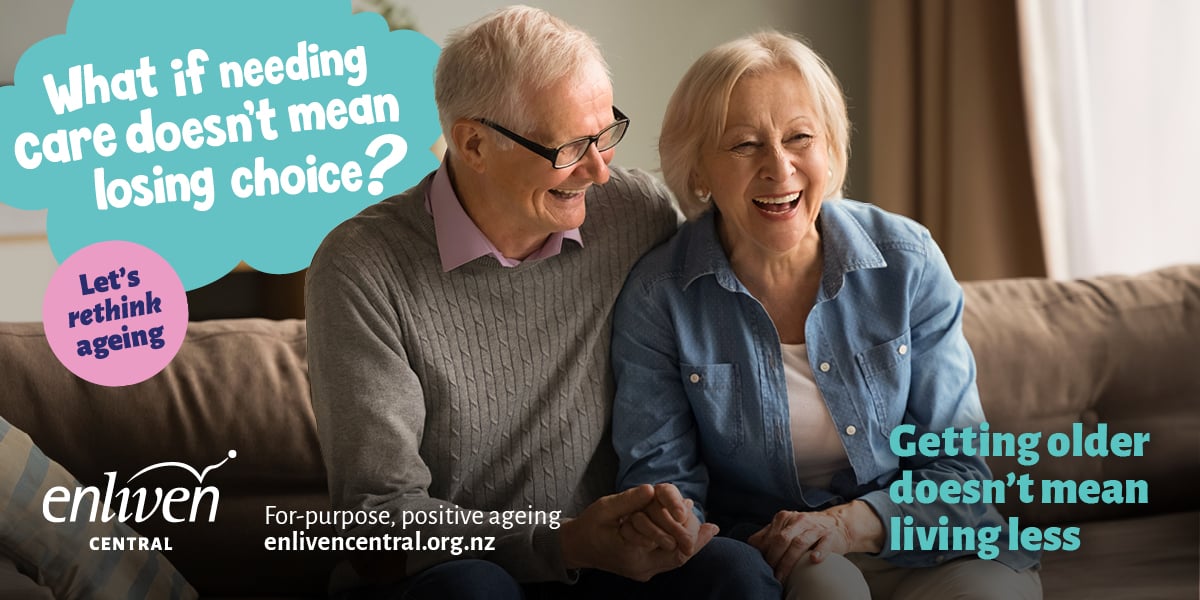
PSC 00340 GoMedia OOH 1200x600 v2 FINAL
Week 2

What if care still felt like home?

 Moving into care is about far more than packing belongings - it can mean leaving behind familiar routines, relationships and a sense of control. So how can residential care become somewhere a person genuinely feels at home?

This article explores why choice, belonging and meaningful connections matter, and how Enliven Central makes space for residents’ histories, whānau and individuality.
 

PSC 00340 GoMedia OOH 600x320 v2 FINAL
Week 3

Where the money goes when profit isn't the goal

As New Zealand’s aged care sector faces growing demand and increasing financial pressure, an important question remains: where does the money go?

Enliven Central’s not-for-profit model reinvests funds into care, its people, homes and communities. Discover why, when profit isn’t the point, residents can remain at the heart of every decision.
PSC 00340 GoMedia OOH 600x320 v2 FINAL-1
Week 4

What if care didn't depend on what you can afford?

 As premium rooms become more common across New Zealand’s aged-care sector, quality care should never depend on what someone can afford. Around 70% of Enliven Central’s rooms are standard rooms, helping people with limited financial means access care close to their loved ones and communities. Because “standard” does not mean second best - it means a comfortable, welcoming home where every person receives quality care, dignity and a genuine sense of belonging. 
PSC 00340 NZME Showstopper Tablet 1024x768 v2 FINAL
Week 5

What if care changed as life does?

This week explores how an older person’s support needs can change over time, and the pressure this can place on them and their whānau. Through Linda's story, it shows how Enliven Central’s villages, care homes, day programmes and respite care can offer different levels of support while helping people stay connected to familiar communities. Its central message is that care should adapt as life changes, while protecting each person’s dignity, choices and sense of belonging.
PSC 00340 NZME Showstopper Tablet 1024x768 v2 FINAL-1
Week 6

What if village living was about more than lifestyle?

Retirement village living is often promoted as a lifestyle choice, but a genuine sense of home and community matters just as much.

Discover how Enliven Central’s boutique villages bring people together, while its not-for-profit model ensures funds are reinvested into supporting older people.

Because village living should be about more than where you live – it should help you keep living well.

PSC 00340 NZME Showstopper Tablet 1024x768 v2 FINAL-2

What Enliven Central stands for

Enliven Central is a not-for-profit provider of retirement living, rest home care, hospital-level care, dementia care, respite and other positive ageing services across the lower North Island. Our approach begins with the person. We take time to understand each individual’s story, culture, relationships, routines and interests, then support them to retain as much choice, independence and purpose as possible.

Frequently asked questions about Enliven

The Eden Alternative is an internationally recognised philosophy of care that aims to reduce loneliness, helplessness and boredom among older people. At Enliven Central, its principles guide how our teams support choice, independence, companionship and meaningful participation in everyday life. It helps shift the focus from completing care tasks to supporting the whole person. 
Enliven Central treats each rest home as the residents’ home, not simply as a facility or workplace. Residents are encouraged to shape their daily routines, bring their personality into their surroundings, maintain relationships and participate in decisions about life in the home. Staff are there to support the people who live there and respect how they want their day to look. 
A not-for-profit aged care provider does not distribute profits to private shareholders. Any surplus Enliven Central generates is reinvested in its services, facilities and communities. This allows the organisation to focus on the wellbeing of residents and the long-term provision of care rather than delivering returns to investors. 
Yes. Enliven Central offers standard rooms without premium accommodation charges at all of its rest homes. Residents in standard rooms receive the same commitment to quality care, dignity, inclusion and clinical support. The availability of standard rooms varies between homes, and eligibility for publicly funded residential care is determined through the government assessment process. 
Enliven Central provides a range of services, including rest home, hospital-level, dementia and respite care. If a resident’s needs change, the team works with the resident, their whānau and relevant health professionals to understand the available options. Services and availability differ by location, so it is helpful to discuss possible future needs when choosing a home. 
Enliven Central villages are generally smaller, boutique communities where residents can maintain their independence while getting to know their neighbours and local team. Because Enliven Central is not-for-profit, choosing an Enliven village also supports an organisation that provides aged care and positive ageing services across the lower North Island, and any profits are re-invested to providing care for those in need.

Ready to explore your options?

Whether you are considering retirement living, looking for care or simply planning for the future, our team can help you understand the options available. 
PSN-6705-HR-1

Let's Rethink Ageing

Featured image for What if retirement living was about more than lifestyle? 20.10.2026 What if retirement living was about more than lifestyle? What if village living was about more than lifestyle? Open a retirement village brochure and the promise is often easy to recognise: attractive homes, landscaped grounds, freedom from maintenance and a calendar of things to do. Some offer pools, gyms, ... Read More Featured image for What if care could change as life does? 13.10.2026 What if care could change as life does? What if care could change as life does? It often starts small. A fall in the hallway, a hospital stay that runs longer than expected, or a loved one who begins to lose their way home from the dairy. Then one day, the arrangements that worked, such as a ... Read More Featured image for Dignity shouldn't depend on what you can afford 04.10.2026 Dignity shouldn't depend on what you can afford Dignity shouldn’t depend on what you can afford When it comes to aged residential care homes, a room can come with a premium price tag - typically ranging from $5 to more than $100 per day, according to Health NZ | Te Whatu Ora - unless it’s a ‘standard’ ... Read More Featured image for Where the money goes when profit isn't the goal 28.09.2026 Where the money goes when profit isn't the goal Where the money goes when profit isn't the goal New Zealand's aged care sector is at a tipping point. Demand for aged care services is expected to grow by more than 90% over the next two decades, while the system already shows signs of strain: bed ... Read More Featured image for The hardest part of moving into care isn’t packing 22.09.2026 The hardest part of moving into care isn’t packing The hardest part of moving into care isn’t packing A favourite chair. Photographs on the wall. The dog waiting by the door. Home is made up of things we can see and things we cannot: familiar faces, private rituals, the freedom to decide who comes in and ... Read More Featured image for Care begins with the person 16.09.2026 Care begins with the person Care begins with the person New Zealand’s aged care system is under mounting pressure. In its August 2026 report, A place to grow old, the Aged Care Ministerial Advisory Group described the system as underfunded and fragmented, with residential care ... Read More