


What if village living was about more than lifestyle?
Open a retirement village brochure and the promise is often easy to recognise: attractive homes, landscaped grounds, freedom from maintenance and a calendar of things to do. Some offer pools, gyms, cinemas and other resort-style facilities. For many people, those features are genuinely appealing.
But choosing where to spend the next chapter of life involves something a photograph of a swimming pool cannot capture. Will I know my neighbours? Will people notice if I have had a difficult day? Can I contribute to the community, rather than simply live alongside it? And if my needs change, will support still be within reach?
These questions matter to a growing number of New Zealanders. The Retirement Villages Association says more than 49,000 people now live in retirement villages, while the number of available units has roughly doubled over the past decade.
Research commissioned by Te Ara Ahunga Ora Retirement Commission in 2023 found that people saw practical and social benefits in village living, including security, companionship, freedom from maintaining a home, and access to support and health services. It also found that choosing a village was often an emotional decision, influenced by its atmosphere and whether the place simply felt right.
The lifestyle matters. But “lifestyle” is not only a list of facilities.
For some people, the right fit is a large development with extensive amenities. Others want something more personal: a smaller community where faces quickly become familiar, residents can shape village life, and the people running the village know more than their villa number. Residents in Enliven Central villages enjoy forming personal relationships with the dedicated village coordinators, meaning support is there every step of the way.
That is the thinking behind Enliven Central’s nine retirement villages across the lower North Island. They offer independent living in boutique communities, with space for privacy and the opportunity to know the people nearby. Their scale helps create the conditions for neighbours to become a genuine community.
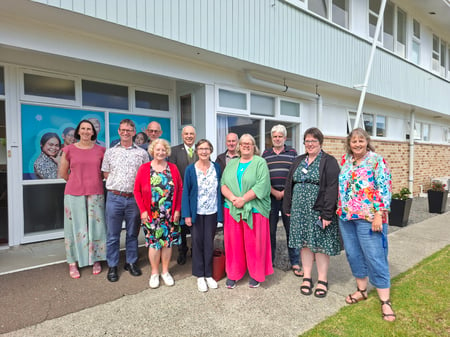
At Kandahar Village in Masterton, resident Trevor has watched that community develop around its recreation hall, village gatherings and the everyday relationships between residents.
“We have a great recreation hall, which enables all the residents to just enjoy the comfort and camaraderie with everybody,” he says.
The important word is camaraderie. It cannot be installed like an appliance or added to a list of property features. It grows when people see each other often enough to become known, when someone organises a gathering and neighbours turn up, and when residents can raise an issue and trust that somebody will respond.
“I think the Enliven team support us very well when we have any issues here that need to be sorted out, and that gets dealt with very quickly,” Trevor says.
He is equally clear about what he does not need.
“We don’t have the likes of a huge swimming pool here like some do, and I think that is great,” he says. “I would rather see the money that we put into this through our investment to be spent on smaller things that can happen around the place, rather than those big things that probably half of the people won’t use.”
That view reflects another significant difference. Enliven Central is part of Presbyterian Support Central, a registered charity and not-for-profit organisation. There are no private shareholders receiving a distribution. Surplus funds are reinvested into Enliven’s charitable purpose, including its villages, rest homes, health support, community services and the people and facilities involved in providing care.
For Trevor, that changes what his decision supports.
“I like the way that Enliven is set up, being a not-for-profit organisation,” he says. “I think that the management want to see that things go back into the village as opposed to go back into shareholders’ pockets.”
Choosing an Enliven Central village therefore has an impact beyond one home or resident. Village living helps support a wider network of services for older people across the lower North Island.
There is a personal benefit too. A question that sits quietly behind many retirement village decisions is what happens if independent living is no longer enough. Enliven Central village residents receive priority access to Enliven Central homes, where possible and subject to availability. That connection can offer reassurance that, if needs change, there is an established network of rest home, hospital-level and dementia care behind the village.
A retirement village should make life easier and more enjoyable. A warm home, less maintenance, attractive surroundings and opportunities to socialise all matter. But the real measure of village life may be what happens after the sales tour is over: whether residents feel known, whether they have a voice, whether neighbours look out for one another, and whether their investment contributes to something they believe in.
Boutique village living is not about thinking small. It is about recognising that the things which make later life rich are often deeply human: belonging, purpose, reassurance and people who know your name.
Trevor puts it more simply: “I’m very happy here. I’m glad I came here. It’s wonderful.”