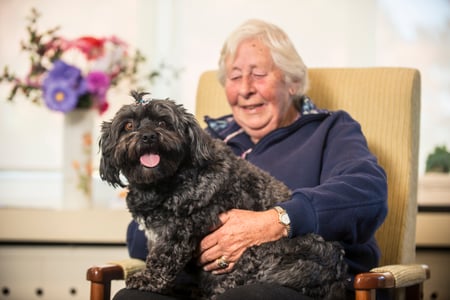



Talk to any family caring for an ageing parent or partner right now, and you'll hear the same story.
Pressure and stress relating to aging family members. Putting your own life on hold because someone you love needs you.
This is happening right now across the Lower North Island and the real wave of demand – expected to peak in 15 years’ time - hasn't even hit yet.
That should worry all of us. Because the numbers tell us the next 15 years will be harder, not easier, unless government acts now.
What families are already carrying
- Exhaustion: personal care and medication management, unpaid, on top of everything else
- Isolation: one person usually ends up coordinating multiple providers, with little backup
- Money worries: lost income and the cost of private support to fill gaps in publicly funded care add up - often at the exact life stage when families can least absorb it.
- Guilt: most people delay residential care as long as they can wanting to do right by a parent or partner, even as the toll on their own health and wellbeing grows.
- Carer burnout: many carers are ageing themselves, managing their own health conditions while providing intensive care to someone else.
None of this is anyone's fault. It's what happens when a system leans harder and harder on unpaid family care without building enough support behind it.
Why the next 15 years matter most
Stats NZ figures show New Zealand's 65+ population is heading from around 900,000 today to about 1.5 million by the early 2050s, and most of those people already live in our communities. In Kenepuru, the 85+ population (the group most likely to need dementia or hospital-level care) is set to roughly double or triple by 2053, with much of that growth landing within 15 years. In places like Horowhenua, where nearly a quarter of residents are already 65+, this isn't a future problem - it's already here.
New facilities and trained staff take 5 to 10 years to plan and build. So, decisions made now are what decide whether care exists when families actually need it.
Home care has limits
Most older people want to stay home as long as possible, and that's a good thing. But once needs shift to advanced dementia, high falls risk, palliative care or serious recovery needs, families genuinely can't do it alone. Without local respite or residential options, care doesn't stop being needed - it just falls back on exhausted families or turns into an avoidable hospital visit.
What we're asking government to do:
- Real, accessible respite: not just for people already at breaking point
- Faster, clearer pathways: into the right level of care
- Building ahead of demand: based on where the 85+ population will be in 2035–2040, not today
- A genuine aged care workforce plan: training, pay and retention, starting now
- Funding that reflects what care actually costs
Three things that must guide this:
- Aged care is health care. It's part of the same system as hospitals and GPs, not a separate, lesser service.
- Local access matters. When local capacity runs out, older people get sent away from their community and family, right when those connections matter most.
- Practical reform, not more reports. We know the problem. What's missing is the follow-through.
A 15-year window, not a 15-year excuse
Families aren't asking to be relieved of caring, most want to keep doing it for as long as they safely can. What they need is a system that has their back: respite when they need a break, and confidence that decent care will exist nearby when home isn't enough anymore.
This election, we're asking local MP candidates across the Lower North Island to commit to funding, workforce and infrastructure decisions that match the scale and timing of demand that is already locked in - so that families aren't left to carry a system-wide gap alone.
If you're a family carer, or you've navigated aged care for someone you love, your experience matters in this conversation.
For more information visit: https://aca.org.nz/
ACA is an advocate for making sure the aged care sector gets the support it needs to provide excellent care for older New Zealanders.